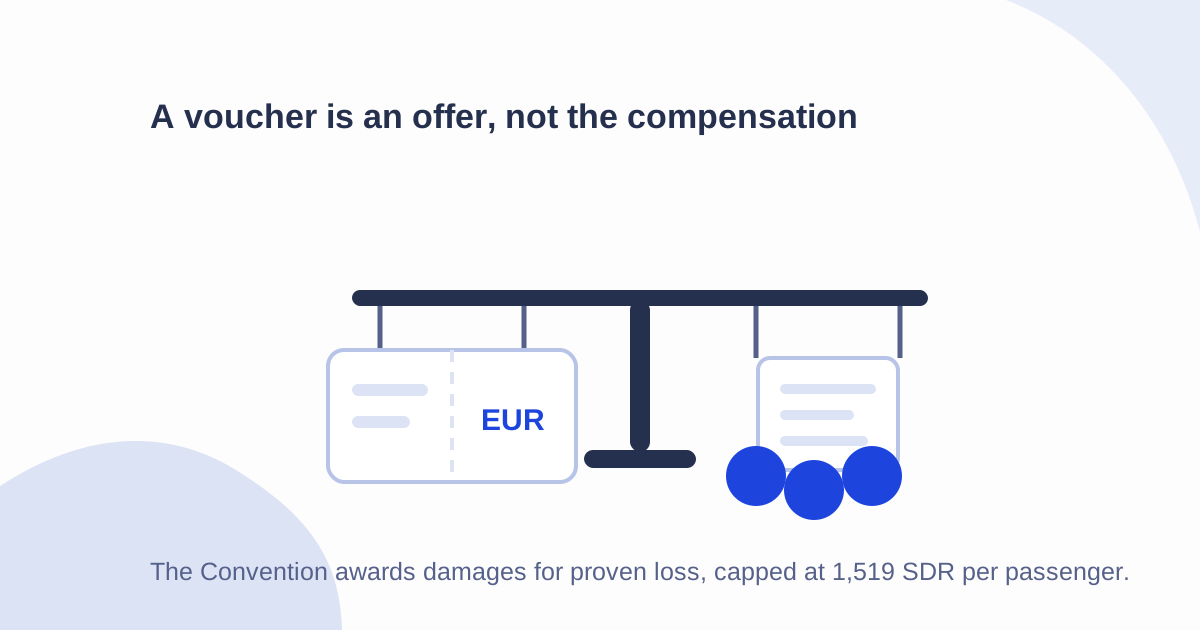
The Montreal Convention gives you damages, meaning money for proven loss up to 1,519 SDR per passenger. It says nothing about vouchers, so an offer of flight credit, miles or goodwill is a settlement proposal the airline is free to make and you are free to decline. Before accepting, read what the offer closes: most voucher settlements are worded as full and final, so the file ends there even if a repair quote later comes in higher. Compare the offer against your documented loss, ask in writing for the reasoning behind any reduction, and if the figure is close but the currency is wrong, ask for the same amount as a bank transfer.
A voucher is an offer, not the remedy
When a carrier decides a baggage claim it usually has three ways to close it: pay money, replace or repair the item, or offer credit for future travel. Only the first two are the remedy the treaty describes. Article 17(2) of the Montreal Convention makes the carrier liable for damage sustained in the case of destruction, loss or damage to checked baggage, and Article 22(2) caps that liability at 1,519 Special Drawing Rights per passenger. What is being capped is damages, which in every legal system means a sum of money measured by the loss.
That does not make a voucher improper. Parties are free to settle a claim on any terms they both accept, and for a passenger who flies the same route twice a year, credit worth more than the cash figure can be a perfectly sensible deal. The point is simply that you are being offered a trade, not being paid what the claim is worth. Treat it the way you would treat any other offer: work out the number first, then decide whether the alternative currency is worth the difference.
- Damages under the Convention are money, measured by proven loss.
- A voucher, miles or goodwill credit is a settlement the airline proposes.
- You can accept it, decline it, or ask for the same figure in cash.
Read what the offer closes before you click accept
The material part of a voucher offer is rarely the amount. It is the sentence next to it. Settlement wording such as full and final settlement of all claims arising from this incident ends the file, and a repair quote that arrives a week later, or a missing item you had not yet noticed, no longer has anywhere to go.
This matters most in damage cases, because the true cost is often unknown at the moment the offer lands. A cracked shell can be quoted at one price by a repairer and written off as irreparable by another. A wheel assembly can turn out to be unavailable for a discontinued model. If you have not yet obtained the repair evidence the airline itself usually asks for, you are accepting a number before you know the number.
Vouchers also carry conditions the cash equivalent does not: an expiry date, single-use restrictions, exclusion of taxes and fees, no transferability, and validity on the issuing carrier only. A 250 euro credit that expires in twelve months and cannot cover the taxes on the fare is not 250 euros.
- Check for full and final settlement wording before responding.
- Get the repair quote or the irreparability statement first if damage is involved.
- Read expiry, transferability, route and tax restrictions on the credit itself.
- Ask whether accepting closes the claim for items you have not yet listed.
Depreciation tables are airline policy, not the Convention
Low offers are often explained with a depreciation table. Carriers publish these openly: airBaltic states a reduction of 15 percent per year of age up to a maximum of 70 percent, and Icelandair applies 10 percent per year. Applied to a four-year-old suitcase, the same bag is worth very different amounts depending on which airline lost it, which tells you these figures are commercial practice rather than a rule of law.
None of that makes depreciation unreasonable in principle. Damages are meant to restore the loss actually suffered, and a used bag is not worth its shop price. But the deduction should track the real value of the specific item, not a flat table applied without looking at it. A three-year-old case in good condition, with the purchase receipt and photographs from the outbound flight, is evidence against a mechanical 45 percent haircut, and it is fair to say so in writing.
The same reasoning applies to contents. An itemised list with purchase dates, prices and proofs of purchase is what moves a contents claim off a standard offer, because it converts an assertion into a figure the airline has to engage with.
- Ask which depreciation rate was applied and where it is published.
- Answer it with purchase evidence and the condition of the actual item.
- For contents, an itemised list with dates and prices beats a round number.
How to answer a low or voucher-only offer
Keep the reply short and factual, in the same channel that produced the offer, quoting the report reference. Say that you are treating the offer as a settlement proposal, set out your documented figure with the evidence attached, and ask for the reasoning behind the difference. If the amount is acceptable but the form is not, say so plainly and ask for the same sum by bank transfer.
Avoid two common mistakes. The first is arguing about the ceiling: the 1,519 SDR figure is the maximum the carrier can be liable for, not a sum anyone is entitled to, and quoting it as though it were an entitlement weakens an otherwise good claim. The second is threatening damages the Convention does not allow. Article 29 states that in any action for damages punitive, exemplary or any other non-compensatory damages shall not be recoverable, so demands for compensation for stress or inconvenience on top of the documented loss have nowhere to land.
Watch the clock while you negotiate. Article 35 extinguishes the right to damages if no legal action is brought within two years of arrival, and a negotiation that drifts pleasantly for eighteen months has cost you most of your options.
- State the documented figure and attach the evidence again.
- Ask for the basis of the reduction in writing.
- If only the currency is wrong, request the same amount as a transfer.
- Keep the two-year action deadline from Article 35 in view throughout.
When taking the voucher is the right call
Sometimes it is. If the credit is comfortably above your documented loss, has a usable expiry date, and you fly that carrier anyway, the trade is in your favour and holding out for cash simply costs you time. Small delay claims in particular, where the whole file is a handful of receipts for a toothbrush and a shirt, are rarely worth a long argument.
The calculation changes when the loss is large, when the evidence is still incomplete, or when the credit is restricted to routes you do not fly. Those are the cases where a written reply, one clear figure and the underlying receipts usually get a better answer than the first offer did.
- Voucher clearly exceeds the documented loss and you use the airline: reasonable.
- Evidence incomplete, or damage not yet quoted: do not close the file yet.
- Credit restricted to routes or fares you do not use: ask for money instead.
What to keep whichever way you answer
Whether you accept or decline, the record should stay intact. If a settlement is later disputed, the useful documents are the ones that show what was offered, when, and on what basis.
- the offer itself, in full, including the settlement wording
- your reply and the date you sent it
- the receipts, inventory or repair evidence behind your figure
- any explanation the airline gave for a deduction
- the arrival date, so the two-year deadline stays visible
Primary sources
We use primary and official material for the deadlines and liability framework in this guide. Airline conditions and the facts of an individual journey still need to be checked.
Turn the checklist into a reviewable claim.
Check the timeline, organise the receipts and build the letter before opening the airline's official filing route.
Check my claim